Ebook Info
- Published: 2024
- Format: PDF
- File Size: 1.41 MB
- Authors: Brian E. Lacy, MD, PhD, FACG
Description
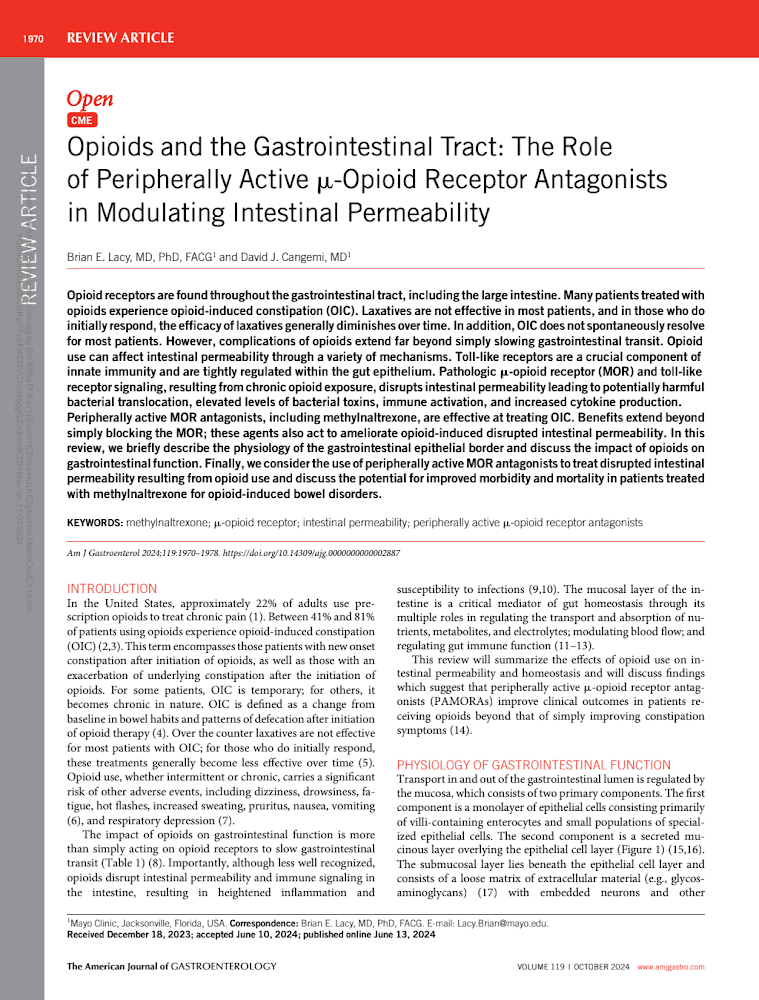
This article reviews the effects of chronic opioid use on the gastrointestinal tract, noting that opioids disrupt intestinal permeability through pathologic m-opioid receptor and Toll-like receptor signaling, leading to issues beyond standard opioid-induced constipation (OIC). The authors discuss the use of peripherally active m-opioid receptor antagonists, such as methylnaltrexone, which are effective for OIC and also help to ameliorate the opioid-induced disruption of intestinal permeability.
Free Download