
Ebook Info
- Published:
- Number of pages:
- Format: PDF
- File Size: 84.48 MB
- Authors: Eric Reichman
Description
THE MOST CLEAR, COMPLETE, AND EASY-TO-UNDERSTAND REVIEW OF EMERGENCY MEDICINE PROCEDURES AVAILABLE
Reviews
Free Download
THE MOST CLEAR, COMPLETE, AND EASY-TO-UNDERSTAND REVIEW OF EMERGENCY MEDICINE PROCEDURES AVAILABLE
This fourth edition of Facial Plastic and Reconstructive Surgery keeps readers up-to-date on recent developments in the field, including microvascular techniques, minimally invasive cosmetic procedures, and unique applied technologies. Along with comprehensive surgical chapters, the text addresses practical issues driving changes in facial plastic surgery practice: ethnic variations, anti-aging strategies, ambulatory surgical concerns, and evidence-based decision making.
Since I am a visual learner, I have bought a lot of medical atlases in human and veterinary medicine over the years. They usually contain excellent color photos like this one but with only a short caption describing just what’s in the image. This one however has a series of photos related to a case example of each condition which is briefly, but amply described in several paragraphs labeled Patient Story, Introduction, Epidemiology, Etiology & Pathophysiology, Clinical & Laboratory Diagnosis, Differential Diagnosis, Management, Followup, Patient Education & Resources, Provider Resources, and References. For me, a far better name for this book would be “Internal Medicine Atlas / Encyclopedia”. It’s well worth the price.

The ultimate text on the principles and practice of regional anesthesia and pain management – thoroughly updated
This book integrates scienti c data, experts’ knowledge, evidence based-medicine and technical data into clinical gastrointestinal practice in a clear and concise manner. It provides information from the basics of EUS starting from the principle of ultrasound to the clinical practice of diagnostic and therapeutic procedure, meanwhile integrating new techniques such as contrast-enhanced ultrasound, elastography, fusion imaging and new therapeutically approaches such as drainages and EUS-guided anti-tumor therapy. Reviewed by J Gastrointestin Liver Dis, Dec 2014
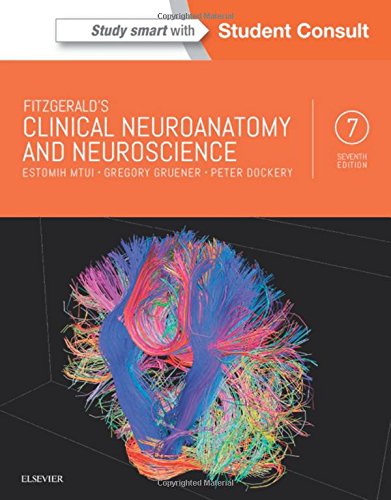
Utilizing clear text and explanatory artwork to make clinical neuroanatomy and neuroscience as accessible as possible, this newly updated edition expertly integrates clinical neuroanatomy with the clinical application of neuroscience. It’s widely regarded as the most richly illustrated book available for guidance through this complex subject, making it an ideal reference for both medical students and those in non-medical courses.
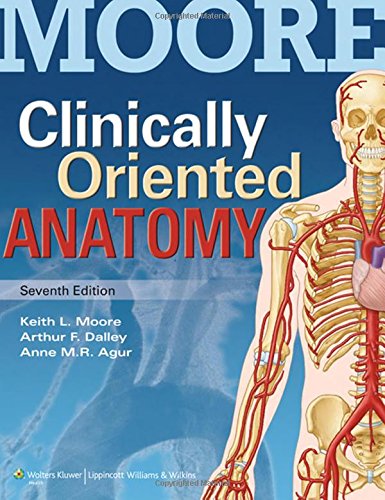
Clinically Oriented Anatomy provides first-year medical students with the clinically oriented anatomical information that they need in study and practice. This best-selling anatomy textbook is renowned for its comprehensive coverage of anatomy, presented as it relates to the practice of medicine, dentistry, and physical therapy. The 7th edition features a NEW-AND-IMPROVED ART PROGRAM to reinforce its position as the primary resource serving the needs of anatomy students during both the basic science and the clinical phases of their studies. Moore is the popular choice for anatomy in many programs, including: medical, dental, physician assistant, chiropractic, podiatry, osteopathic, physical therapy, occupational therapy, kinesiology, and sports medicine.
This book breaks down bone and soft tissue tumors in a way that makes the topics easily digestible without lacking in thoroughness. Each chapter has tables with clear classifications of tumors, molecular findings, clinicopathologic correlations (with lots of pictures), and treatment strategies. After the overview and where most books would stop, this book offers a second way to approach the information, via case presentations. Each tumor is evaluated through an actual case, including radiology, pathological differentials, treatments provided for that case and patient outcome. For pathologists, this book has a perect ratio of pictures to text, great differentials, and up to date molecular data. For clinicians (orthopedic surgeons, oncologists, etc), this book provides a great, comprehensible pathologic overview, radiologic characteristics of tumors, treatment strategies and case reports that can help guide clinical decision making. I believe the case presentations makes this book an extremely valuable tool and I anticipate referencing it often throughout my career (in fact, I used it yesterday!)

Tackle your toughest challenges and improve the quality of life and long-term outcomes of your patients with authoritative guidance from Fanaroff and Martin’s Neonatal-Perinatal Medicine. Drs. Richard J. Martin, Avroy A. Fanaroff, and Michele C. Walsh and a contributing team of leading experts in the field deliver a multi-disciplinary approach to the management and evidence-based treatment of problems in the mother, fetus and neonate. New chapters, expanded and updated coverage, increased worldwide perspectives, and many new contributors keep you current on the late preterm infant, the fetal origins of adult disease, neonatal anemia, genetic disorders, and more.

For physicians and nurses in critical care medicine, the increased demand and use of ultrasound necessitates further training. Critical Care Ultrasound helps meet that need. A straightforward, practical approach, an abundance of detailed ultrasound images and online video demonstrations provide step-by-step guidance on the principles and effective use of this important imaging modality in both diagnosis and assistance with specific procedures. Coverage includes the latest applications of ultrasound for neurologic critical care; vascular problems; chest; hemodynamic monitoring; and abdominal and emergency uses, as well as assistance in a variety of specific procedures in critical care medicine
Optimized for the new radiology boards, the visual approach and clear formatting of Core Radiology promotes streamlined learning for radiology residents, practicing radiologists, medical students and practitioners in allied fields. All subjects covered by the American Board of Radiology Core Exam are included in this image-rich, comprehensive resource.
Use best practices in effectively treating infections of the head, neck, and orofacial complex! Head, Neck, and Orofacial Infections: An Interdisciplinary Approach is the only resource on the market with in-depth guidelines to the diagnosis and management of pathology due to severe infections. No longer do you have to search through journal articles and websites, as this comprehensive, full-color reference covers both cutting-edge and time-tested approaches to recognizing and handling infections. From well-known OMS educator James Hupp and oral surgeon Elie Ferneini, and with chapters written by expert contributors, this book is ideal for use in the classroom, as preparation for the NBDE and specialty exams, and as a clinical resource for patient care.
One downside to the book is the thinnest of the pages. The pages remind me of the type of paper used in a magazine. If your a person that uses a highlighter, you’ll find that a regular highlighter will “bleed” through the pages. I would recommend possiblely a Bible highlighter even though it’s not the best solution. The “magazine” type paper used in this book is “shiny” and the Bible highlighters I’ve found don’t really grab onto the paper as well as it would probably in a bible but it’s better than a regular highlighter “bleeding” through the page. That’s the only downside I can say about this book. The content far exceeds anything else. I just thought of the possibility of using highlighter tape (since I just thought of that possibility, I’m not sure of the cost factor for the tape — I completely understand that being a major factor when your already buying extremely high priced textbooks).
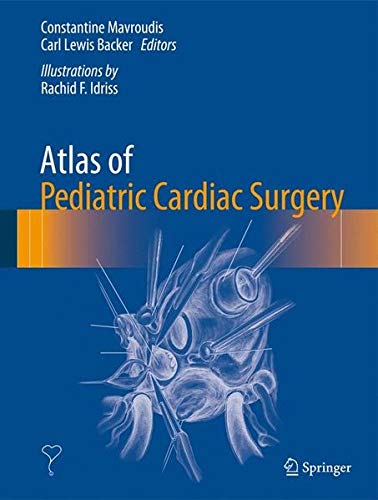
The raison d’etre for a new atlas of congenital heart surgery is based on the reality that the specialty has undergone numerous changes in the last few years resulting in improved techniques and new operations. The sheer number of new procedures and the required attendant technical skills to successfully complete an operation has become a challenge to master, especially for residents who are pursuing a career in congenital heart surgery. While the techniques that we are espousing are mostly our own, there is a great deal of similarity amongst international centers owing to the influence of video presentations, manuscript publications, and chapter reviews. We therefore believe that the techniques that are illustrated in this atlas are likely to be similar to the techniques that are taught worldwide to residents and fellows. The atlas is organized generally by diseases and procedures pertaining thereto. Two general sections involve cannulation techniques and palliative procedures, respectively. A special section depicts difficult problems in the form of clinical vignettes that may arise during cardiopulmonary bypass such as: decreased venous return, undiagnosed patent ductus arteriosus, and technical errors leading to hemodynamic complications. The reader is instructed to apply measures that will lead to resolution of these problems. We have chosen procedures, which cover the breadth of congenital heart surgery. While perhaps not totally inclusive, the reader will find the greater majority of congenital heart procedures illustrated and explained in this text
A great update and advancement from edition one. Well written, up to date on evidence, user friendly, applicable to everyday practice and excellent video. Excellent education tool!
Pathologists have long recognized that pediatric autopsy requires great care in technique and dissection to ensure that easily overlooked malformations are recognized and accurate diagnoses are made. The highly experienced authors have created a new edition of Handbook of Pediatric Autopsy Pathology, a comprehensive reference guide to the actual performance of the pediatric autopsy and the optimal recognition and interpretation of pathologic findings. The Handbook of Pediatric Autopsy Pathology, Second Edition covers the spectrum of pediatric pathology with particular reference to those conditions that can be identified at autopsy.