Description
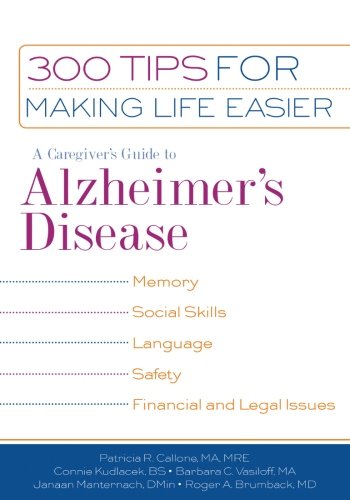
An estimated 5 million Americans have Alzheimer’s disease. That number continues to grow – by 2050 the number of individuals with Alzheimer’s could range from 11.3 million to 16 million. Alzheimer’s disease is not a normal part of aging. It is a devastating disorder of the brain’s nerve cells that impairs memory, thinking, and behavior. Written for patients, their families, and caregivers, A Caregiver’s Guide to Alzheimer’s Disease: 300 Tips for Making Life Easier will help readers understand what is physically happening to the brain so they can empower their own special skills and talents throughout the disease process. The book is divided into three sections that correspond to the progression of Alzheimer’s and the unique challenges encountered at each stage.
Designed for easy use at the bedside, this manual contains the practical information health care professionals need to provide optimal end-of-life care. The book presents a multidimensional, holistic approach to assessment and management of the physical, psychological, social, and spiritual needs of the patient and family. Topics covered include cultural diversity in end-of-life care; communicating with patients and families; predicting life expectancy; terminal care; non-pain symptom management; pain control; palliative interventions; pediatric palliative care; record keeping; and ethics.
Maximum oxygen uptake during exercise is one of the best predictors of operative mortality and of prognosis in chronic cardiac or respiratory disease. Cardio-pulmonary exercise (CPEX) tests are therefore an increasingly common component of pre-operative assessment and the management of patients with chronic cardiopulmonary problems. Part of the Oxford Respiratory Medicine Library (ORML) series, this pocketbook guides clinicians through the parameters measured in CPEX testing so that they can understand the underlying physiology and are able to interpret the results. Clinical scenarios, common patterns, key points, and practical tips all make this book easy to follow, even for those readers who have little prior knowledge of the subject.
This concise paperback summarizes basic and clinical sciences relevant to our understanding of attention-deficit/hyperactivity disorder (ADHD) with a particular emphasis on history, etiology, phenomenology, neurobiology, assessment, and treatment. Written by an internationally recognized clinician, researcher, and educator, the book ideally targets the learning needs of students, residents, and early-career practitioners, but also provides an updated overview with likely appeal for more experienced clinicians. The text is organized into succinct and well-referenced chapters. Critical information is easily discerned in accompanying key points, boxes, tables, and figures. References and suggestions for further reading are handy aids for readers who wish to obtain additional information on material described. Topics of special interest include assessment, approaches to initiating ADHD medications, controversies surrounding medication use, complementary and alternative treatments, and management of ADHD with co-occurring substance abuse. Of particular note, the author utilizes a developmental perspective that recognizes how the disorders manifestations and treatment needs change over the lifespan from childhood to adulthood. The book is not intended to be an encyclopedia covering everything known about ADHD, but is an easily read user-friendly introduction that provides a solid foundation for clinical management of the disorder.
Collective knowledge of the origins and pharmacology of pain are evolving rapidly, providing increased hope for better pain management and a far greater quality of life for patients worldwide. However, there are few works dedicated to guiding primary care practitioners and clinical researchers through the use of adjuvant analgesics. Part of the Oxford American Pain Library, Adjuvant Analgesics provides a detailed discussion of the various classes of these drugs including antidepressants and anticonvulsants, cannabinoids, topical analgesics, and local anesthetics. Chapters cover a basic introduction to adjuvant analgesics for pain control, appropriate clinical applications of the various drug classes in the management of common pain problems, and on drug-drug interactions between adjuvant analgesics and traditional analgesics. Important pain entities such as acute postoperative, cancer-related, neuropathic pain, and fibromyalgia are addressed, filling an important gap in today’s medical literature.
Part of the Oxford Neurology Library series, this second edition of Alzheimer’s Disease is a succinct and practical introduction to the diagnosis, evaluation and management of Alzheimer’s disease. This practical pocketbook contains 14 fully updated chapters on key topics such as pathophysiology, epidemiology, pharmacological treatments, and psychological symptoms. The introduction of new chapters on atypical presentations, end-of-life issues, and case vignettes ensure the reader is fully equipped with the latest understanding of the possible causes of the disease, methods of diagnosis, and management techniques. Content is presented in a concise and easy to read format designed for quick reference, with helpful key points listed at the start of each chapter.
Lippincott Williams & Wilkins is pleased to introduce the second edition of Anderson’s Atlas of Hematology, the most comprehensive atlas for the laboratory technologist. Understanding that effectiveness as a technician comes through the ability to identify what one sees under the microscope, this atlas equips students with visual examples of the concepts covered in their programs. This new edition has been thoroughly updated and revised based on the latest basic science and clinical findings. In addition, you’ll find new, higher-quality images as well as the most recent World Health Organization classification of hematologic disorders.
Although antibiotics are among the most widely used pharmaceuticals, they are also often inappropriately and over-prescribed. Indeed there are increasing predictions that unless we moderate our use of these drugs, bacterial resistance will eventually render them useless. As there are no serious contenders to take the place of antibiotics, including a failure to find new classes of these drugs, it is essential for modern medicine that their efficacy is preserved.
Gives medical students 500 questions, answers, and explanations to prepare for the behavioral science section of the USMLE Step 1. The new edition includes many new questions in the two-step clinical format to simulate the USMLE Step 1.
Between 1941 and 1945 as many as 70,000 inmates died at the Bergen-Belsen concentration camp in northwestern Germany. The exact number will never be known. A large number of these deaths were caused by malnutrition and disease, mainly typhus, shortly before and after liberation. It was at this time, in April of 1945, that Michael Hargrave answered a notice at the Westminster Hospital Medical School for ‘volunteers’. On the day of his departure the 21-year-old learned that he was being sent to Bergen-Belsen, liberated only two weeks before. This firsthand account, a diary written for his mother, details Michael’s month-long experience at the camp. He compassionately relates the horrendous living conditions suffered by the prisoners, describing the sickness and disease he encountered and his desperate, often fruitless, struggle to save as many lives as possible. Amidst immeasurable horrors, his descriptions of the banalities of everyday life and diagrams of the camp’s layout take on a new poignancy, while anatomic line drawings detail the medical conditions and his efforts to treat them. Original newspaper cuttings and photographs of the camp, many previously unpublished, add a further layer of texture to the endeavors of an inexperienced medical student faced with extreme human suffering.
Bhutani’s Color Atlas of Dermatology is a concise atlas which covers various dermatological ailments. This fully revised sixth edition is comprised of 25 chapters, which highlight the treatment modalities available and the newer advances in the field of dermatology, as well as traditional knowledge. A separate chapter on rare dermatological diseases is included, covering topics on reactive disorders, genodermatoses, pseudoepitheliomatous keratotic and micaceous balanitis of civatte, and papulonecrotic tuberculide of the glans, to help improve diagnosis. Other topics include pyodermas, fungal and viral infections, leprosy, disorders due to physical agents, sexually transmitted diseases (STDs), HIV Infection and AIDS, and diseases caused by arthropods and parasites, with detailed diagnosis and treatment for each topic. Bhutani’s Color Atlas of Dermatology also provides an overview of energy-based technology and the fundamentals of lasers surgery as a first-line treatment for several congenital and acquired dermatological conditions. It features discussion on various lasers, indications for use in dermatology, and their side effects and complications. This book is a comprehensive, highly illustrated and clinically relevant book for dermatologist interns and practising dermatologists. Key Points Sixth edition; fully revised and updated Covers new advances in the field of dermatology Over 550 full colour images and illustrations
Bioactive Food as Dietary Interventions for Liver and Gastrointestinal Diseaseprovides valuable insights for those seeking nutritional treatment options for those suffering from liver and/or related gastrointestinal disease including Crohn’s, allergies, and colitis among others. Information is presented on a variety of foods including herbs, fruits, soy and olive oil. This book serves as a valuable resource for researchers in nutrition, nephrology, and gastroenterology.
Bipolar disorder is one of the most common and disabling conditions affecting humankind. It is a leading cause of disability and mortality worldwide, affecting millions of people. The illness is complex and dynamic, so that many individuals are misdiagnosed for years and clinicians struggle with identifying the most appropriate and successful treatment. Because it is complex and common, people suffering from bipolar disorder seek help from clinicians of all types – from psychiatrists, family doctors, gynecologists, and internists to psychologists, social workers and other therapists. For clinicians without significant experience with bipolar disorder, how to manage the condition can be mystifying. Even experienced psychiatrists will frequently find themselves uncertain of the best approach to a given individual with bipolar illness. This pocket-sized guide was specifically written with this diverse group of clinicians in mind. It provides a concise, practical and current overview of bipolar disorder, including making a correct diagnosis, identifying important medical and psychiatric comorbidities, and describing our current understanding of the epidemiology, genetics and neurobiology of the condition. In addition to these topics to provide context, the majority of the book is focused on a programmatic approach toward managing bipolar disorder, including discussions of specific subpopulations, such as children or women who are pregnant. The book may also be of interest for people with bipolar disorder and their families, to help guide treatment seeking and provide education about this sometimes mystifying condition. The author is an internationally recognized and trusted expert in the study and treatment of bipolar disorder, annually named a Best Doctor® and recognized by US News and World Report® as a Top 1% Psychiatrist, whose own extensive clinical experience working with people with bipolar disorder guides this book.
Pediatric Otolaryngology remains the definitive, comprehensive reference text for the subspecialty. This fifth edition has been fully updated with 29 new chapters, 144 new authors, and new color clinical photographs and photomicrographs. Charles D. Bluestone, of the University of Pittsburgh School of Medicine, editor of the previous four editions, is joined by two new editors: Jeffrey P. Simons also of UPSOM and Gerald Healy of Harvard Medical School. Together with 14 section editors respected in their area of expertise,editors peer-reviewed every chapter and produced a totally new reference that reflects the most current research and clinical developments of the past decade.
These quick and convenient flash cards will greatly assist students in reviewing and learning the important details about pharmacology. Each of the 269 cards offers a brief question and answer, using a trigger phrase to help students memorize and recall correct responses. BRS Pharmacology Flash Cards is part of a series of portable flash cards covering microbiology, pathology, and now pharmacology. Designed to accompany BRS Pharmacology, these review cards will also help students enrolled in other basic science or pharmacology courses or those preparing for USMLE Step 1
New second edition of this pocket book containing concise and practical pharmaceutical information for busy clinical pharmacists.
The interplay between mind and body is a rapidly developing area of Obstetrics and Gynaecology, growing in prominence as many areas of medicine recognise the importance of understanding the physical, mental, and social aspects of numerous health conditions. Clinical Psychosomatic Obstetrics and Gynaecology: A Patient-Centred Biopsychosocial Practice is a fundamental work that enhances the understanding of the management of womenâs disease conditions resulting from psychosomatic or mind-body interactions that are routinely encountered by clinicians.
Designed for busy primary care specialists and other first-line care providers, Conn’s Current Therapy 2018, by Drs. Edward T. Bope and Rick D. Kellerman, delivers up-to-date treatment information in a concise yet in-depth format. Recognized leaders in the field provide their personal approaches and evidence-based clinical management options for the conditions you’re most likely to see in your everyday practice.
The CRC World Dictionary of Medicinal and Poisonous Plants: Common Names, Scientific Names, Eponyms, Synonyms, and Etymology provides the starting point for better access to data on plants used around the world in medicine, food, and cultural practices. The material found in the five volumes has been painstakingly gathered from papers of general interest, reports and records, taxonomic revisions, field studies, herbaria and herbarium collections, notes, monographs, pamphlets, botanical literature, and literature tout court. It includes sources available at various natural history libraries, floras and standard flora works, local floras and local histories, nomenclatural histories, and the International Code of Botanical Nomenclature.
This book is a concise introduction to the interventional radiology field and is designed to help medical students and residents understand the fundamental concepts related to image-guided interventional procedures and determine the appropriate use of imaging modalities in the treatment of various disorders. It covers the history of interventional radiology; radiation safety; equipment; medications; and techniques such as biopsy and drainage, vascular access, embolization, and tumor ablation. The book also describes the indications, patient preparation, post-procedure care, and complications for the most common interventional radiology procedures.
Over 20 million people in the United States have diabetes, a metabolic disorder characterized by the body’s lack of production or ineffective use of insulin, and the rate is on the rise. Diabetes can cause acute, as well as long-term complications when not properly controlled. Some of the complications may include coma, cardiovascular disease, renal failure, blindness, nerve damage, vascular damage, and poor healing which can lead to amputation. Though there is no cure for either Type I or Type II diabetes, ongoing effort to develop new drug and gene therapies continues. In the meantime, the goals of treatment are disease management, prevention of complications, and improved quality of life. The choice of therapeutics varies by diabetes type and may depend on other significant factors. The selected regimen often includes medication, injection therapy, exercise and change in diet.
The tools necessary for correctly identifying complex coronary lesions and plaques. The data required to accurately diagnose rare disease progression and patterns. With Diagnostic Methods in the Cardiac Catheterization Laboratory, all of the essential diagnostic modalities you need in the lab are at your fingertips.
The current blueprint for medical education in North America was drawn up in 1910 by Abraham Flexner in his report Medical Education in the United States and Canada. The basic features outlined by Flexner remain in place today. Yet with the past century’s enormous societal changes, the practice of medicine and its scientific, pharmacological, and technological foundations have been transformed. Now medical education in the United States is at a crossroads: those who teach medical students and residents must choose whether to continue in the direction established over a hundred years ago or to take a fundamentally different course, guided by contemporary innovation and new understandings about how people learn.
PreTest® is the closest you can get to seeing the test before you take it. Written by clerkship faculty and reviewed by students who know what it takes to pass, this book is perfect for clerkship exam review and the USMLE Step 2CK. Emergency Medicine: PreTest® asks the right questions so you’ll know the right answers. Open it and start learning what’s on the test.
Part of the Oxford Rheumatology Library, the second edition of Fibromyalgia Syndrome provides a succinct and practical guide to help rheumatologists and general practitioners diagnose and manage patients with fibromyalgia syndrome. The emphasis throughout is on tailoring treatment to the individual patient, and considering a combination of education, non-pharmacological, and pharmacological treatments. This comprehensive approach improves symptoms and quality of life in all those treated for FMS, benefitting not only patients but also healthcare providers and society.
Key Features Concise and comprehensive A complete book for surgery which needs no other reference Makes the students to cover surgery up to the core in 10 days Updates from latest editions of standard textbooks Concept-oriented text with exam-oriented highlights Easily understandable language and presentation More than 350 memory boosting illustrations Review of more than 600 high edged MCQs Covers all the concepts asked by national board examiners and hence strongly recommended for the NEET-PG and DNB entrance examinations. About the Book: Nutshell series for FMGE/DNB/NEET-PG General Surgery FMGE: Foreign medical graduate examination (Medical council of India-MCI screening test) and NEET: National Eligibility Entrance Test are standard examinations conducted by National Board of examination (NBE) to validate the standard of Indian students with the international ones. Nutshell series: Surgery for FMGE covers all the chapters systematically in a succinct and didactic fashion of presentation to aid in the glory of its users. This guide is presented in tabular format with highlighted high yield points and equipped with more than 350 detailed illustrations that will enable the users to understand the core concepts clear and make the revisions faster. MCQs are organized by the end of each chapter give users orientation towards the examination patterns. Contents 1. Basics in General Surgery 2. Shock, Blood Transfusion and Organ Transplantation 3. Trauma 4. Oral Cavity 5. Head and Neck (General) 6. Salivary Glands 7. Thyroid Disorders 8. Parathyroids and Adrenal Glands 9. Breast Disorders 10. Diseases of Esophagus 11. Stomach and Duodenum 12. Intestinal System 13. Hepatobiliary and Pancreatic System 14. Liver 15. Spleen 16. Urological Surgery 17. Hernia, Umbilicus, Abdominal Wall and Peritoneum 18. Elective Neurosurgery 19. Cardiothoracic Surgery 20. Burns and Cosmetic Surgery 21. Vascular Surgery 22. Oncosurgery 23. Pediatric Surgery Index
For patients and family caregivers the journey through illness and transitions of care is characterized by a series of progressive physical and emotional losses. Grief reactions represent the natural response to those losses. Grief is defined by a constellation of physical, cognitive, emotional and spiritual manifestations, varying in length and severity. While grief reactions are common and expected responses to loss, they have the potential to cause significant suffering. And, while grief is not a disease, it can develop into a pathological process warranting specialized treatment. Additionally, some aspects of grief overlap with the symptoms of clinical depression and anxiety, making diagnosis difficult.
Clinical practice consensus guidelines for management of heart failure are available from the American Heart Association/American College of Cardiology, Heart Failure Society of America, Canadian Cardiovascular Society, and European Society of Cardiology. The guidelines from these organizations, based on evidence from clinical trials and expert agreement, are largely concordant and provide useful information for practitioners. Yet, the organization of the guidelines may confound efforts by a practitioner to determine which specific intervention, or combination of interventions, are most appropriate for an individual patient. As part of the Oxford American Cardiology Library, Heart Failure utilizes the staging of heart failure proposed by the ACC/AHA guidelines as a framework to develop a systematic approach for diagnosis and treatment across a broad spectrum of clinical presentations. Each chapter addresses a different stage in the progression of heart failure and provides a patient-centered description of the appropriate diagnostic and treatment options for that setting. Each chapter also incorporates discussion of the diagnosis and treatment options for both low ejection fraction heart failure patients and preserved ejection fraction heart failure patients, of which the latter group comprises at least 50% of all heart failure cases in clinical practice. Heart Failure restructures the information in the clinical guidelines to a format that is more accessible and clinically useful to practitioners.
A basic introduction to human anatomy for science and nursing students. This revised text includes: relevant clinical applications for each chapter; new icons highlighting clinical, developmental and human ageing topics; and internal affairs” boxes that demonstrate how body systems are related.