
Ebook Info
- Published: 2014
- Number of pages:
- Format: PDF
- File Size: 39.42 MB
- Authors: Terry Kenakin
Description
Reviews
Free Download

This first dedicated overview for beam’s eye view (BEV) covers instrumentation, methods, and clinical use of this exciting technology, which enables real-time anatomical imaging. It highlights how the information collected (e.g., the shape and size of the beam aperture and intensity of the beam) is used in the clinic for treatment verification, adaptive radiotherapy, and in-treatment interventions. The chapters cover detector construction and components, common imaging procedures, and state of the art applications. The reader will also be presented with emerging innovations, including target modifications, real-time tracking, reconstructing delivered dose, and in vivo portal dosimetry.
“This book is a concise multi-author publication describing the wide range of techniques and equipment used in diagnostic and interventional urology. … In summary, this is a concise, well-referenced and reasonably priced volume useful on a personal basis to specialist trainees, or in a departmental library.” (Dr. Kevin Gill, RAD Magazine, July, 2016)

This new edition provides a comprehensive overview of procedures for the gastrointestinal tract. The volume describes the indications, contraindications, and precise method of a procedure, under normal anatomical conditions and when the gastrointestinal tract is surgically altered. In addition to revised chapters from the previous edition, the latest edition features new chapters that cover such topics as endoscopic accessories, cleaning and disinfecting gastrointestinal endoscopes, tissue sampling, removal of foreign bodies, and confocal endoscopy and robotic endoscopy. Each chapter is also accompanied by photographs, diagrams, tables, and algorithms to precisely and easily display complex information.
Now significantly revised based on student feedback, this best-selling text provides a quick, authoritative review of the most important clinical aspects of neuroanatomy. A new, full-color design highlights the essential information you need to know to excel on course exams and the USMLE Step 1. New objectives begin every chapter, contents have been reorganized and streamlined, and all information has been completely updated. A new Gross Structure chapter lays the foundation for understanding the sectional anatomy in the Atlas chapter, and all terminology is now consistent with Terminologia Anatomica. A companion website offers USMLE-style questions for study and review.
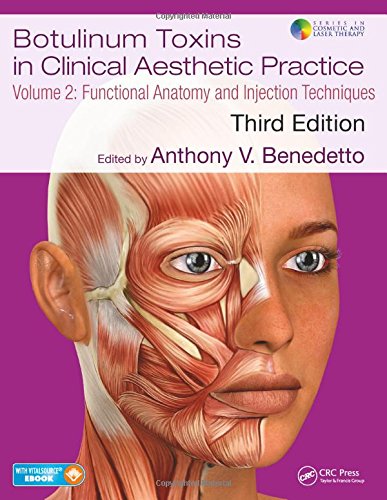
This bestselling guide to the complexities of botulinum toxins has now been extensively revised, updated, and expanded. Now in two volumes, Volume 1 examines clinical adaptations in the toxins in use today, use with other injectables, use for other parts of the body and other indications, and legal aspects, while Volume 2 documents in detail the functional anatomy and injection techniques for the face, neck, and upper chest. No practitioner of aesthetic medicine will want to be without this comprehensive and authoritative guide from the international experts.
This critique is not of the entire series–I think the NM book, which I bought at the same time, is much better, for example–but only of this GI case review. And yes, I know I’m not being specific; this is my recollection of a book I read a few months back in response to an Amazon.com email requesting a review. I have the book marked up, but really can’t take the time to point out errors in detail. Sorry.

Electrocardiography for Health Care Professionals provides ECG skills training for health care students as well as health care personnel who are interested in mastering additional skills. The text includes the essential skills needed to perform an ECG, including anatomy of the heart, basic characteristics, equipment, appropriate intervention, and other technical applications, such as Holter monitoring and stress testing. Emphasis throughout the text is placed on troubleshooting.
One downside to the book is the thinnest of the pages. The pages remind me of the type of paper used in a magazine. If your a person that uses a highlighter, you’ll find that a regular highlighter will “bleed” through the pages. I would recommend possiblely a Bible highlighter even though it’s not the best solution. The “magazine” type paper used in this book is “shiny” and the Bible highlighters I’ve found don’t really grab onto the paper as well as it would probably in a bible but it’s better than a regular highlighter “bleeding” through the page. That’s the only downside I can say about this book. The content far exceeds anything else. I just thought of the possibility of using highlighter tape (since I just thought of that possibility, I’m not sure of the cost factor for the tape — I completely understand that being a major factor when your already buying extremely high priced textbooks).
Advanced Health Assessment and Diagnostic Reasoning, Third Edition covers the diagnostic reasoning process that providers must follow when assessing an actual case. The text outlines each step of the health assessment process and further demonstrates the link between health history and physical examination. It also provides the healthcare professional with the essential data needed to formulate a diagnosis and treatment plan.
Chapters deal with a specific diagnosis and provide a comprehensive discussion of options for management including drugs, interventions, and surgery. The studies that provide evidence for each treatment option are presented and complex concepts are communicated effectively with the use of charts, diagrams, and graphics.
My second year of medical school has been pretty disorganized with all the guest lecturers. I honestly don’t think I would be doing very well if it weren’t for this book. It’s basically the first aid we all know and love, but with explanations instead of spewing of facts. Very organized and easy to read.
Also, there’s enough added / updated material in comparison w/ the 2016 version. Differences I’ve noticed after looking at Endo are 2 figures were updated (one adding where drugs work, the other making it easier to read), and there was more info added about drugs in the Endo pharm section. The GI section has similar updates to diagrams (blood supply to GI structures easier to read, picture added for Hirschsprung disease, different images used for path of disease ect.). The FA diagrams are one of the most helpful things in the book for me, so I was happy to see that many of them were updated / made better.
“This book has excellent illustrations. The colour pictures now lie in the appropriate section of the text, rather than in a separate section. There is now a two-level system for the evidence base, one for ‘strong recommendation’ and one for ‘expert opinion’. Judges comments This is an updated edition on hepato-pancreato-biliary (HPB) surgery in a series of well-written and well-referenced books.
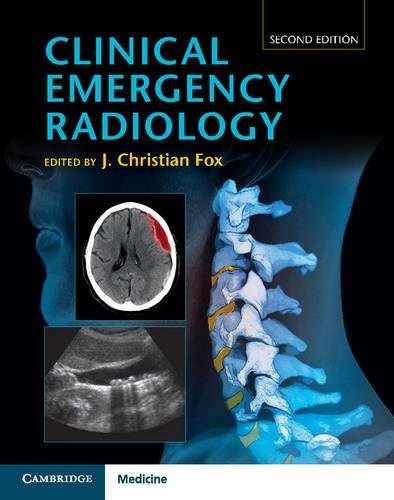
This book is a highly visual guide to the radiographic and advanced imaging modalities – such as computed tomography and ultrasonography – that are frequently used by physicians during the treatment of emergency patients. Covering practices ranging from ultrasound at the point of care to the interpretation of CT scan results, this book contains over 2,200 images, each with detailed captions and line-art that highlight key findings. Within each section, particular attention is devoted to practical tricks of the trade and tips for avoiding common pitfalls. Overall, this book is a useful source for experienced clinicians, residents, mid-level providers, or medical students who want to maximize the diagnostic accuracy of each modality without losing valuable time.
Bought this for my 4th year EM clerkship. It presents pathology in a diagnosis-first manner (similar to FA for Step 1), where is has a section for each disease process that highlights pertinent history, physical, lab findings, and then states treatment. While the information is great, it isn’t too helpful from a real-world (or test question) standpoint, which works from a chief complaint -> ddx -> diagnosis -> treatment. I ended up not using this book after the first week of my clerkship.
Clinical Gynecologic Oncology, by Drs. Di Saia and Creasman, is the leading medical reference book geared toward helping you improve gynecologic cancer outcomes. You’ll see how to take advantage of the latest advances in early detection and improved treatment options for gynecologic cancers, especially uterine and cervical cancers, equipping you with the skills you need to provide effective and compassionate care for your patients.
Each condition is presented in a standard format including general information, symptoms, clinical features, ancillary tests, pathology, treatment, systematic evaluation and selected references. On the facing page, magnificent colour photographs illustrate the characteristic features of a given condition. The differential diagnosis chapter provides a more problem based approach to understanding retinal disease and more closely stimulates clinical practice: recognise clinical features, formulate a differential diagnosis, narrow the differential diagnosis, then work up and treat accordingly.